> For the complete documentation index, see [llms.txt](https://docs.snyk.io/llms.txt). Markdown versions of documentation pages are available by appending `.md` to page URLs; this page is available as [Markdown](https://docs.snyk.io/scan-fix-and-prevent/scan-with-snyk/snyk-open-source/package-repository-integrations/artifactory-package-repository-connection-setup/artifactory-registry-for-npm.md).
# Artifactory registry for npm
How to connect Snyk to an Artifactory registry for npm
{% hint style="info" %}
**Snyk is rolling out a new navigation.** The steps on this page describe the classic interface. If your view looks different, visit [Navigate the Snyk Web UI](https://docs.snyk.io/navigate-the-snyk-web-ui#where-things-moved) to map these options to the new interface.
{% endhint %}
## Artifactory Registry for npm
Snyk can use Artifactory Package Repositories with npm and Yarn Projects. This enables Snyk to regenerate lockfiles with the correct URLs when creating Pull/Merge Requests.
{% hint style="info" %}
**Feature availability**
Package repository integrations are available only with Enterprise plans. For more information, see [plans and pricing](https://snyk.io/plans/).
This guide is relevant for Snyk UI integrations only. The CLI supports Yarn and npm Projects with private Artifactory registries.
{% endhint %}
You can add configuration to tell Snyk where your private Artifactory Node.js packages are hosted and under what scope. This is the same information you would normally add in your `.yarnrc` or `.npmrc`
### JavaScript language settings
1. Navigate to **Settings** > **Languages** > **JavaScript** and either the npm or Yarn settings, depending on your Project type.
2. If you have not previously connected to Artifactory, you will be asked to configure an integration first; see [Artifactory Package Repository connection setup](/scan-fix-and-prevent/scan-with-snyk/snyk-open-source/package-repository-integrations/artifactory-package-repository-connection-setup.md).
3. Select **Add registry configuration**.
1. Select **Artifactory** as the Package source.
2. If you want to configure this registry as the default registry url, leave the scope blank.
3. If you want to configure only scoped packages to use this registry, add a scope. For example, `@snyk` which would use the configured registry for all deps prefixed or scoped with `@snyk.`
4. If you want to add a mix of default registry url and scoped packages, add multiple configurations, one for the default and one per scope.
4. When you have added all the registries and scopes you want, click **Update settings**.
### Test the integration
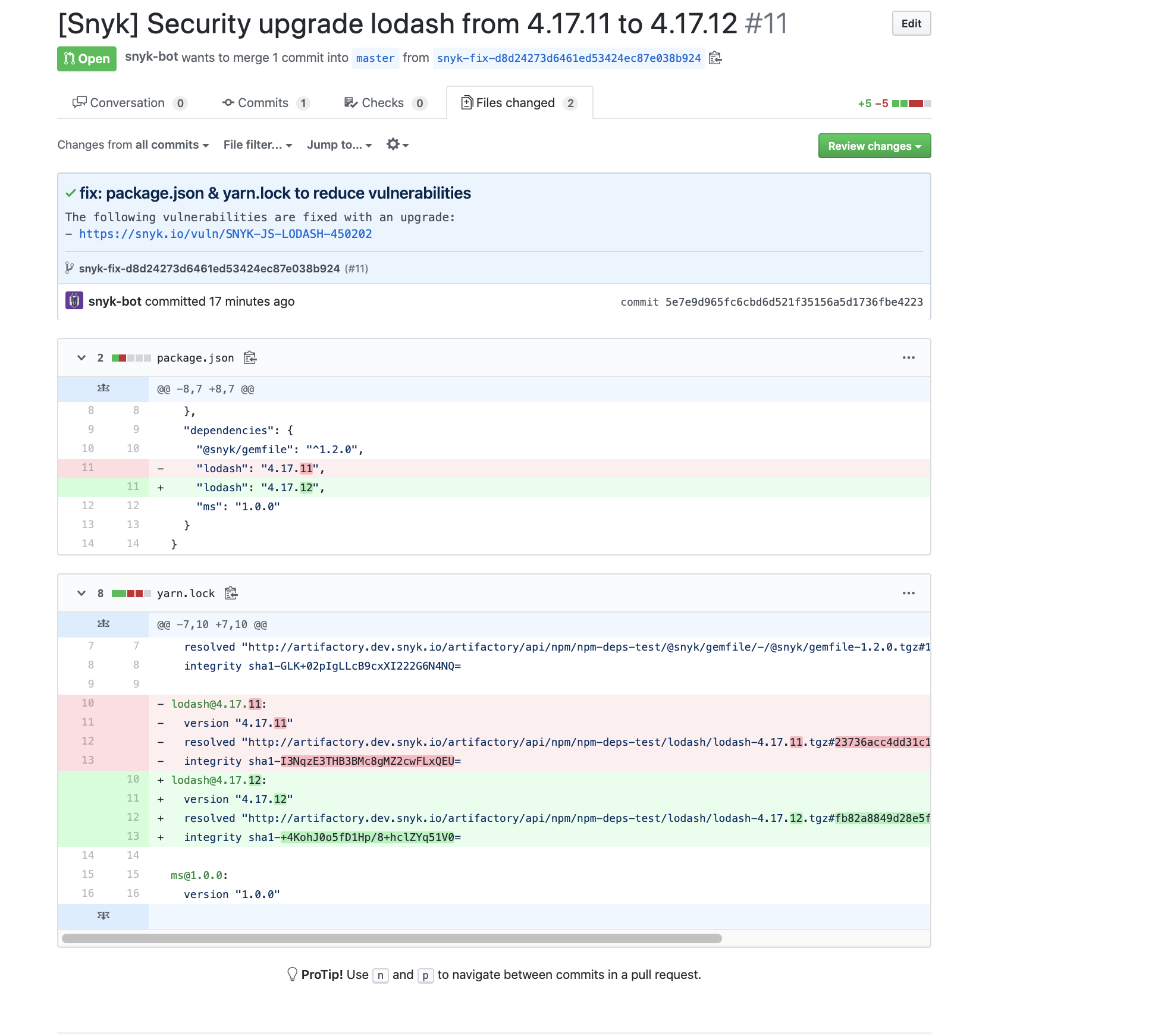
Open a Pull/Merge Request on a Project that contains private dependencies that are hosted in Artifactory to see a lockfile updated and included in the Snyk Fix Pull Request with the correct URL to your repository.
Pull request to test Artifactory integration
---
# Agent Instructions
This documentation is published with GitBook. GitBook is the documentation platform designed so that both humans and AI agents can read, navigate, and reason over technical content effectively. Learn more at gitbook.com.
## Querying This Documentation
If you need additional information that is not directly available in this page, you can query the documentation dynamically by asking a question.
Perform an HTTP GET request on the following URL with the `ask` and `goal` query parameters:
```
GET https://docs.snyk.io/scan-fix-and-prevent/scan-with-snyk/snyk-open-source/package-repository-integrations/artifactory-package-repository-connection-setup/artifactory-registry-for-npm.md?ask=&goal=
```
`ask` is the immediate question: it should be specific, self-contained, and written in natural language.
`goal` is what the user is ultimately trying to achieve, the reason they need the answer. Sharing it helps GitBook give you a better, more relevant answer. A goal is most helpful when it describes the outcome the user wants rather than restating the question. For example, with `ask=how do I create an API token`, a goal like `build a script that syncs our docs to a CMS` lets GitBook tailor the answer to that use case.
The response will contain a direct answer to the question and relevant excerpts and sources from the documentation.
Use this mechanism when the answer is not explicitly present in the current page, you need clarification or additional context, or you want to retrieve related documentation sections.